I haven't been writing that often lately as there isn’t much exciting that’s been going on. For American Thanksgiving on Thursday we were invited a fellow American’s house for dinner, which was really lovely.
I had a lovely but quiet weekend – mostly took it easy and worked on our day hospital proposal. After traveling for so many weeks, I was really glad to stay at home, putter in the garden, and start reading my stack of new novels – I bought some in Kenya, and Claire sent me some. I started my Christmas shopping at Adama’s little artisanat stand; Adama helped me get me telephone hooked up (he’s a friend of the house owner’s nephew who manages the house). Despite being in the artisanat business, he is like a typical Burkinabé person; really friendly & open (and chased away an annoying batique seller who came running up when he saw a toubabu at an artisanat stand); we sat and drank tea, and he taught me anwali, which is an African board game (I think there are versions in most countries). I’m glad to buy things from people who are honest salesmen like that!
Work has mostly been focused on writing our proposal for our clinic; once we have completed it, we hope that BIPAI will help us identify and find the resources we need to provide the level of care we want to provide. We’ve divided up the tasks (both of the proposal and our other work) and one thing I’ve been working on is forecasting numbers of patients & necessary medications and supplies…. I just wish I knew what I was doing! Its interesting trying to put on paper what we’ve learned about the health care system and HIV care here.
The Clinton Foundation has arranged a large donation of all 1st and 2nd line antiretrovirals, cotrimoxazole prophylaxis (to prevent infections in HIV exposed children), testing reagents to provide free HIV testing for kids and a nutritional supplement. That should arrive in January and will be a huge help to our work here. The more challenging problem will be finding funding for some of the other medications for treating opportunistic infections (not to mention the regular problems of childhood) and supplies for treating children with severe malnutrition. We are trying to sneak malnutrition into our HIV clinic because, well…. how to put it diplomatically… that is the biggest weakness we’ve recognized in the general pediatrics care of children here.
By the way, the American issue of Time that has just come out (see http://www.time.com/time/magazine/current) will have two articles about BIPAI and the pediatric AIDS corps. Nothing about Burkina of course, but it does talk about the program in general.
Monday, November 27, 2006

Tuesday, November 21, 2006
Ouagadougou again
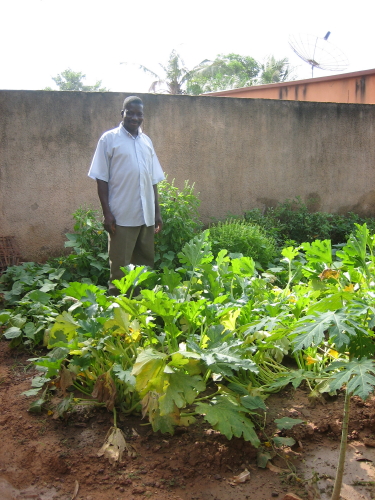
I had brief weekend at home to check out the garden and eat very many cucumbers... the photo is my gardener, Moussa - who has provided all the labour for this gardening project - in between the cucumbers and the basil. Against the wall are the tomatoes, and in the foreground the zucchini. I'm really pleased and I think Moussa and I get along well. I'm looking forward to being at home for a while after this current trip!
Then, it was back to Ouaga... I tried to fly but the flight was cancelled (another mechanical problem) so ended up taking the bus. Its not as fun to be in Ouaga on my own, though I've still had a few really good meals and I've enjoyed the internet access. I head back to Bobo Wednesday.
I've had productive meetings with UNICEF, and some Ministry of Health people about training sessions. We are hoping to fairly rapidly train the physicians who do primary care at regional hospitals to look after kids on ARVs. Right now, they're pretty uncomfortable starting kids on treatment so no kids get started.
At home, my colleagues have been working hard on putting together a proposal for our transitional clinic; BIPAI will help us find the resources we need to get things going. We've divided the tasks to try to be more efficient.
The weather seems cooler now, especially the early mornings - though part of that is just that it is much less humid. And our perspective on what is "hot" is changing... getting off the plane in Bobo the other day, it seemed refreshingly cool... so it was a surprise to hear the pilot say that it was 26C. The rainy season has ended, so we won't expect any more rain until June.
Take care, Laura.
Thursday, November 16, 2006
If its not a good time, its a good story... part II
Well, we made it back to Ouaga but our 3 day journey home has turned into nearly a week. We spent Sunday going from Lusaka to Nairobi (normally a 2 hour flight, but from hotel room to hotel room it took us 16 hours...)... then we had a day in Nairobi, Kenya, where I did some shopping and got things that aren't available in Bobo and had a wonderful afternoon with my friend from fellowship, Maryanne. Nairobi has nearly everything a person could want... the grocery store was overwhelming it was so enormous. We spent Tuesday flying from Nairobi-Bamako, Mali-Burkina. Were we ever glad to get off the plane and into the familiar streets of Ouaga.
Now we're in the middle of a couple days of meetings etc here in Ouaga before we head back to Bobo on Friday. We met with the American embassador today; strange to go in through all those layers of security... even stranger that the American embassador really wanted to meet us! But besides the work, we heard all about what things go on in the American community here.
We are all really looking forward to getting home to Bobo - despite the lack of material goods, and fancy malls and restaurants, its got a certain charm... and its home for now.
Now we're in the middle of a couple days of meetings etc here in Ouaga before we head back to Bobo on Friday. We met with the American embassador today; strange to go in through all those layers of security... even stranger that the American embassador really wanted to meet us! But besides the work, we heard all about what things go on in the American community here.
We are all really looking forward to getting home to Bobo - despite the lack of material goods, and fancy malls and restaurants, its got a certain charm... and its home for now.
Sunday, November 12, 2006
A plane with a flat tire !?!
Our week in Malawi has drawn to a close. Its been very interesting to spend some time in an existing center, and see what is possible. We spent a fair amount of time meeting with various staff and learning about their perspectives and advice on starting a new program.
The Malawi clinic is much like a clinic in North America; clean, new exam rooms with sinks, computers, examining tables and otoscopes. They even have tongue depressors. The cleaning staff wash the floors about three times a day (though ironically, it is a little hard to get the soap dispensers filled). Upstairs is a room of 4 desks & computers for the 13 PAC docs to share. They have a reasonably fast internet connection, which we definitely took advantage of.
We spent some time sitting with the PAC docs while they saw patients; it was neat to see some actual HIV patients. They have clinical officer students (they are the first line caregivers in Malawi; they have 4 years post high school training) who help with translation, and in return they get some teaching. The clinical director is a world expert in malaria, but also has an enormous font of HIV knowledge and experience, as does the other Malawian staff physician.
I actually had quite mixed feelings about being there, because is sure highlights everything that we don’t have…. materials & supplies. free medications for the kids. administrative staff. clinical support. help to figure out how to navigate the HIV treatment world of Burkina and get what we need. What we do have (which the other PAC docs don’t) is the freedom – to hopefully set things up the way we think they should be, to set our own priorities, to set our own hours (which end up being longer than that of the folks in Malawi – but we choose which hours they are). I wish we could have some level of support but still be able to play a crucial role in the design and running of this clinic. As always, David is the most helpful of anyone, and clearly knows how to get things done, where to get resources. His long experience makes him an invaluable resource.
For us, Malawi seems so Westernized… there are so many NGOs, so many foreigners – hundreds of project vehicles. Its interesting, because with this has come a huge industry of Western-style coffee shops, restaurants and stores that to us seems incredible. Although, as in Burkina, many Western luxury items are really expensive for dubious quality.
I’m actually writing this from the departure lounge in Lusaka, Zambia – when we landed on our stopover, the runway was so hot that it blew out 2 of the tires. So, we’re waiting while they try to replace the tires & repair the mechanism – or failing that, send a new plane from Kenya (a 3 hour flight from here). I am dreaming of the dinner I am supposed to have with my friends Maryanne & Doug, a home cooked dinner that I have been looking forward to for weeks…. that sadly, may not happen. Ah well, the perils of international travel.
…. An update ….
So, my lovely dinner with Maryanne is on hold indefinitely as the flight was cancelled. We’re holed up in the Intercontinental. As always when flights are cancelled, a chaotic scene at the airport, with uptight passengers, a lack of information and general chaos. Those who know me well may be surprised (or doubtful to hear) that traveling along I don’t get too uptight… but in a group of 4, I do absorb some of the anxiety of my traveling partners, despite myself.
The Malawi clinic is much like a clinic in North America; clean, new exam rooms with sinks, computers, examining tables and otoscopes. They even have tongue depressors. The cleaning staff wash the floors about three times a day (though ironically, it is a little hard to get the soap dispensers filled). Upstairs is a room of 4 desks & computers for the 13 PAC docs to share. They have a reasonably fast internet connection, which we definitely took advantage of.
We spent some time sitting with the PAC docs while they saw patients; it was neat to see some actual HIV patients. They have clinical officer students (they are the first line caregivers in Malawi; they have 4 years post high school training) who help with translation, and in return they get some teaching. The clinical director is a world expert in malaria, but also has an enormous font of HIV knowledge and experience, as does the other Malawian staff physician.
I actually had quite mixed feelings about being there, because is sure highlights everything that we don’t have…. materials & supplies. free medications for the kids. administrative staff. clinical support. help to figure out how to navigate the HIV treatment world of Burkina and get what we need. What we do have (which the other PAC docs don’t) is the freedom – to hopefully set things up the way we think they should be, to set our own priorities, to set our own hours (which end up being longer than that of the folks in Malawi – but we choose which hours they are). I wish we could have some level of support but still be able to play a crucial role in the design and running of this clinic. As always, David is the most helpful of anyone, and clearly knows how to get things done, where to get resources. His long experience makes him an invaluable resource.
For us, Malawi seems so Westernized… there are so many NGOs, so many foreigners – hundreds of project vehicles. Its interesting, because with this has come a huge industry of Western-style coffee shops, restaurants and stores that to us seems incredible. Although, as in Burkina, many Western luxury items are really expensive for dubious quality.
I’m actually writing this from the departure lounge in Lusaka, Zambia – when we landed on our stopover, the runway was so hot that it blew out 2 of the tires. So, we’re waiting while they try to replace the tires & repair the mechanism – or failing that, send a new plane from Kenya (a 3 hour flight from here). I am dreaming of the dinner I am supposed to have with my friends Maryanne & Doug, a home cooked dinner that I have been looking forward to for weeks…. that sadly, may not happen. Ah well, the perils of international travel.
…. An update ….
So, my lovely dinner with Maryanne is on hold indefinitely as the flight was cancelled. We’re holed up in the Intercontinental. As always when flights are cancelled, a chaotic scene at the airport, with uptight passengers, a lack of information and general chaos. Those who know me well may be surprised (or doubtful to hear) that traveling along I don’t get too uptight… but in a group of 4, I do absorb some of the anxiety of my traveling partners, despite myself.
Sunday, November 05, 2006
Malawi - the BIPAI Network Meeting
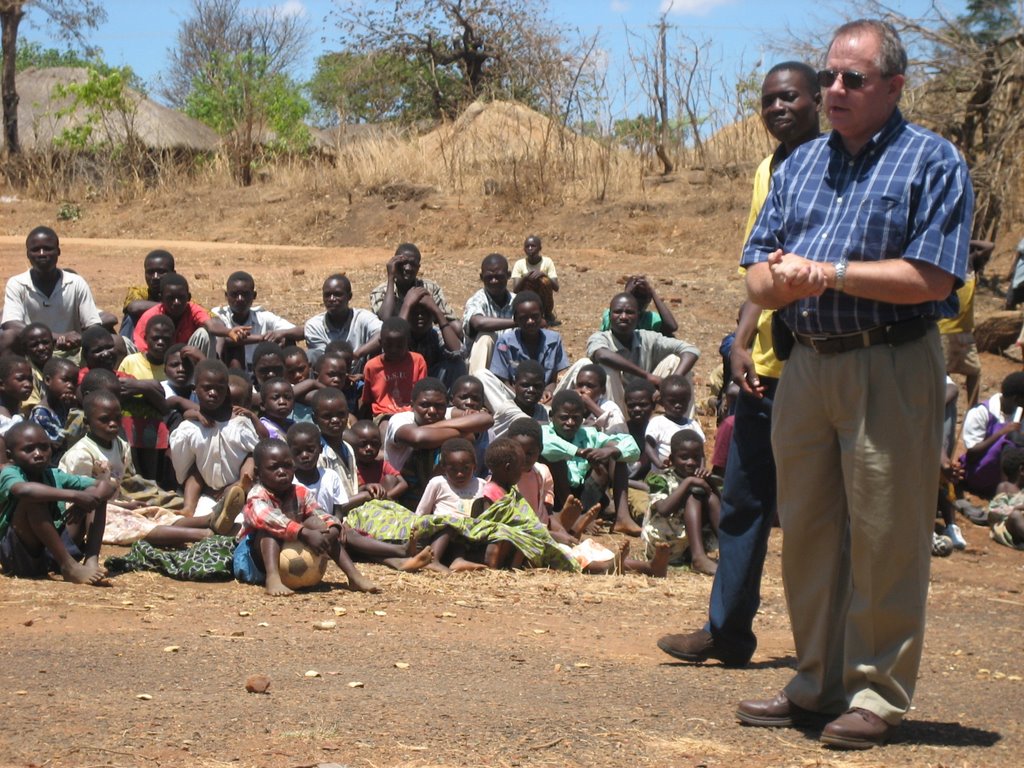
Well, we've had a productive several days in Malawi at the network meetings. Great to see all the PAC docs and BIPAI staff from all over. The people in the other countries are doing some really neat projects and some great work in all sorts of areas of HIV care of children. We're all learning lots, and the staff of BIPAI are very creative at finding solutions to lots of different problems regarding the care of kids with HIV.
Unfortunately, we didn't get to present as we weren't informed of the potential to do so until after the schedule was full.
The downside of seeing everyone is that we realize how much support etc the others have. Though its a trade off; with support also comes less freedom. We are thankful for the freedom we have, and to be starting a program from scratch is an amazing opportunity - just the kind of thing I want to know how to do. We just often wish we got some feedback / support to know if
 we're on the right track, or to let us know if there are avenues we should be exploring etc. So, we're going to try harder to ask more for things that we need / want, and for feedback etc. And we're sticking around here next week to see more about how they do things in Malawi.
One person suggested we should bail and let someone more experienced do this; and I have to say that I don't like that idea one bit. I really, really want to develop this program. I would just like a little advice now and then to help guide us, or even encourage us.
A real highlight was our visit today to Chiwere, David Jones' village - well, not exactly his, but his adopted village. On a hiking trip he met some motivated villagers and then helped them create a community-based orphan / vulnerable children (OVCs) support program. Now the 277 AIDS orphans in the village have been tested, those that need are on therapy, and they have
 food and other support through a variety of activities. They have a singing and drama group as well. We had a wonderfully warm welcome from the children and the NGO volunteers, with singing, dancing, poetry and a drama. It is just so neat to see how pround they are of their activities. David has said (and I think he's got a good point) that the real battle against HIV in much of Africa won't be fought in the fancy COEs in the capital cities... it will be these small scale, grassroots responses that will be the key to surviving this pandemic.
I don't know how much I've mentioned David; he's one of the Vice Presidents of BIPAI, and I have a world of respect for him. At first glance, you might think him an average administrator, but he is anything but. As far as I'm concerned, he is the key to the success of the AIDS Corps, though he doesn't get much credit. He works quietly in the background, but after 5 years of living in Malawi, and being really touched by Malawi and its people, he really understands things here, and how to get things done. And he keeps us sane, especially us in Burkina Faso who have no other administrative support from BIPAI.
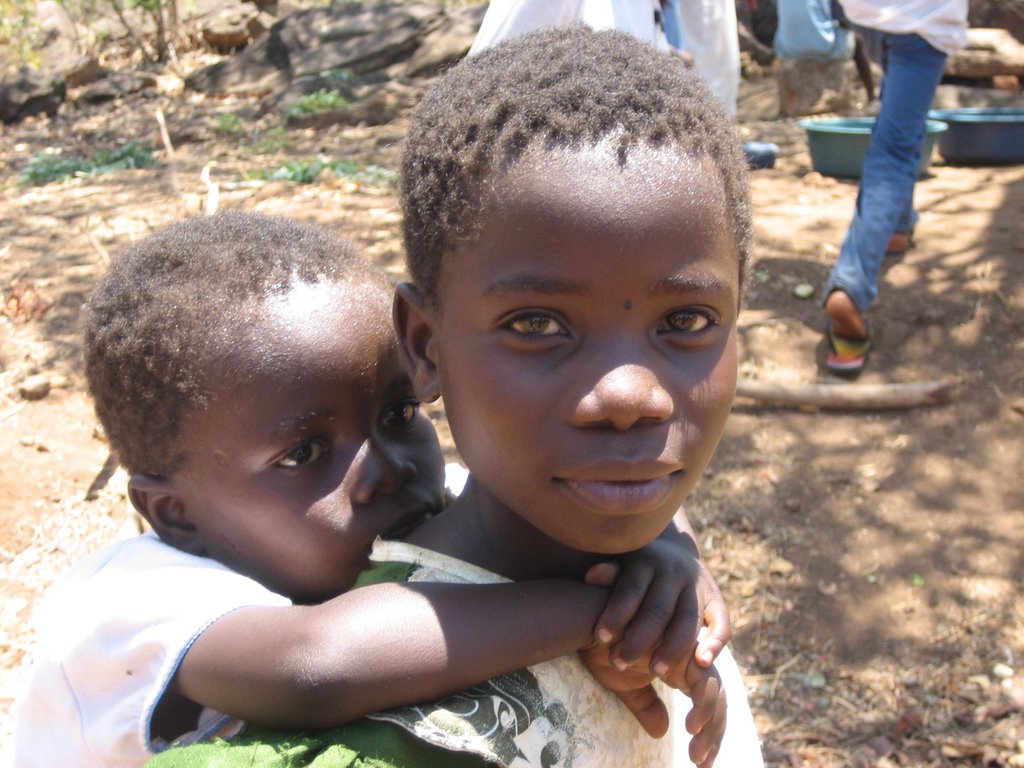
PHOTOS: The first photo is David, and the orphans & vulnerable children. The second one is two orphans, and the final one is 5 of the orphans singing us a welcome song, with the other kids in the background. I can't begin to describe how touching the whole day was.
A weekend off: Lake Malawi
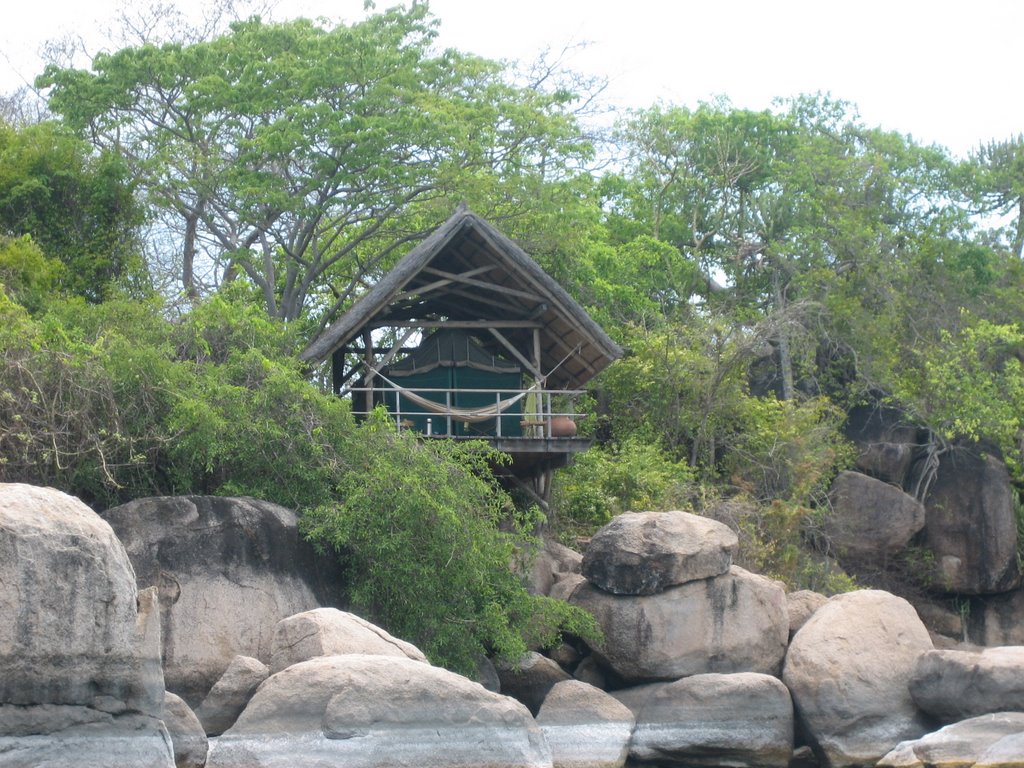
We’ve just returned from a really, really wonderful weekend away at Mumbo Island, on Lake Malawi. “We” is Dana, Allison, Leah and myself. It was a 4 hour drive down to the resort at Cape MacLear on the southern end of the long, thin lake. The water was incredibly blue, with lots of jacaranda in bloom and bougainvilleas everywhere, bright with red, orange and pink flowers. Despite being the hottest time of year here in Malawi, its cooler than at home in Burkina, so we are enjoying the relatively temperate weather (30C during the day).
The 10-km boat ride took about an hour, and as we approached, we could scarcely believe our eyes, a small islet with 5 permanent tents (tents with a thatched roof over top for shade and rain protection, and on the main island hiking trails and a white sand beach with kayaks, snorkel gear, and the main lodge.
We spent the last few days languidly moving from snorkeling to kayak trips around the island, to sunset cruises (well, cruise may be an exaggeration – 10 people in a 15 foot wooden boat with an outboard motor). The snorkeling was better than I expected for a freshwater lake – lots of brightly coloured chiclids (a type of freshwater fish), and the chance to watch cormorants swimming underwater. Leah and I kayaked around the island in about 45 minutes. The meals were lovely.
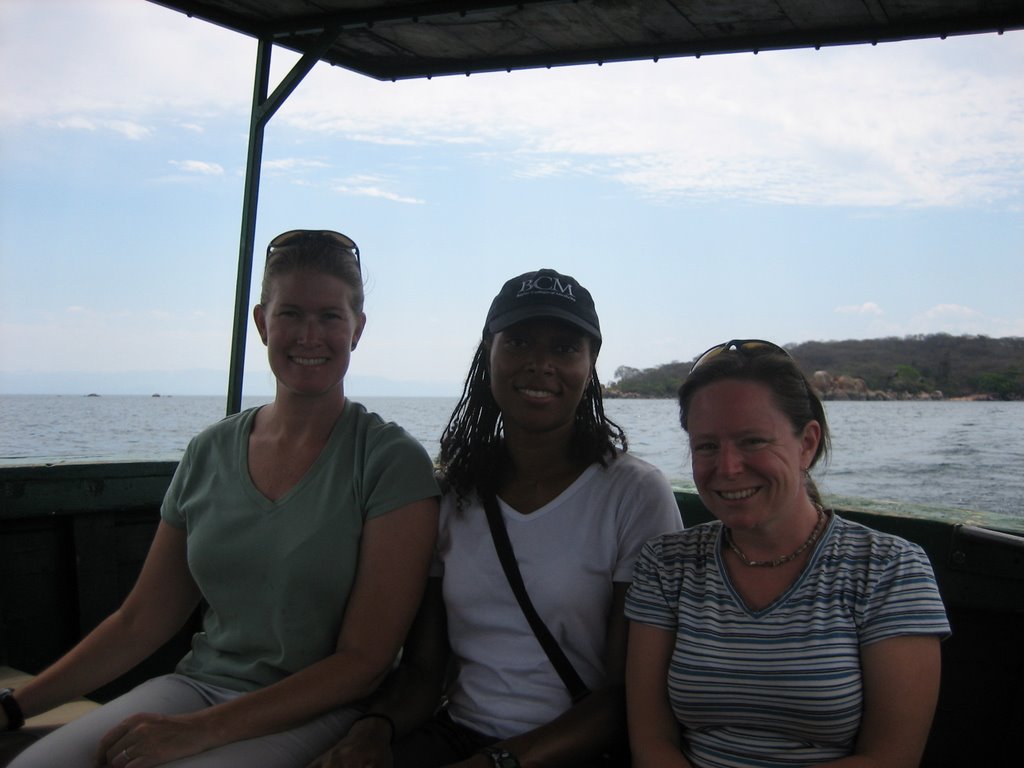
All in all, it was a wonderful break – good to get some space from the annoyances of work, to help work on keeping some perspective. I feel totally rejuvenated (though I got a terrible cold yesterday). Made me remember how important it is to keep some fun in my life. Since moving to Burkina Faso, I have done very few fun things, besides a little reading, knitting, a concert and designing my garden. Not enough activities that totally separate me from the work. I will work on doing that more!
Anyhow, please do keep in touch – the emails / comments from folks really are important to me, they encourage and sustain me during the lonely times, of which there are quite a few.
Take care
With love
Laura
Thursday, November 02, 2006
Dakar – its all about the work
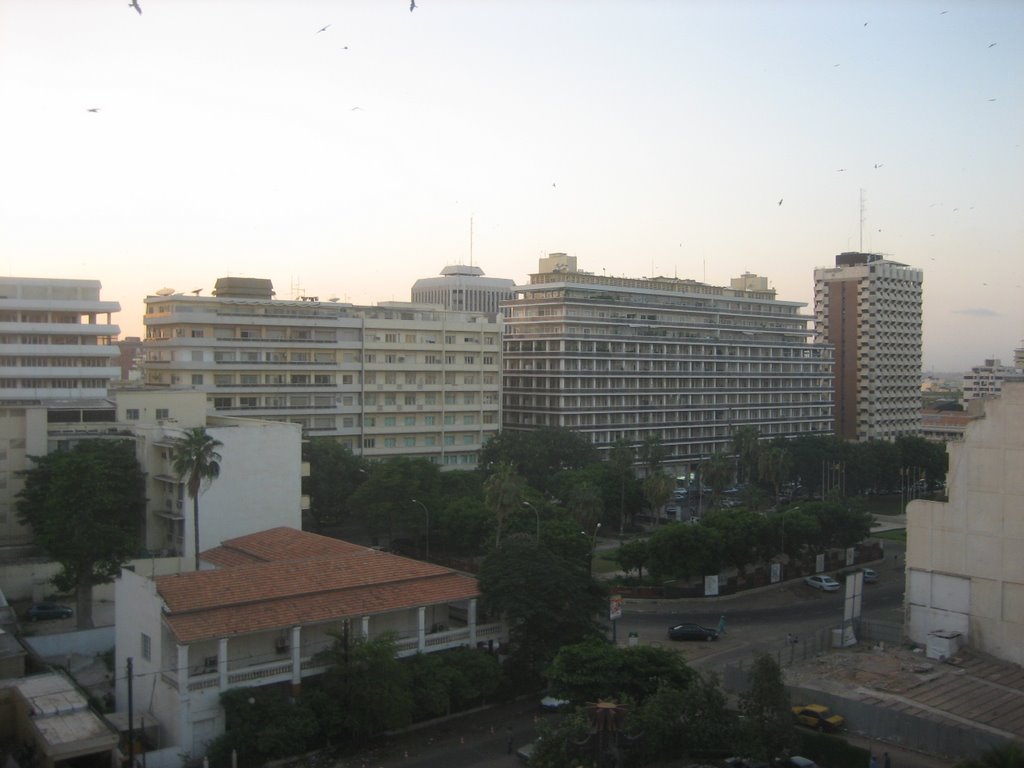
Its been hard to find time to write lately. We spent 3 days in Dakar; hardly left the hotel so I’m not in any position to comment on Dakar, other than to say it is MUCH more cosmopolitan than anything in Burkina – high rise buildings, traffic jams, smog – the whole 9 yards. The food was really good, and women dress very well. The hotel had a beautiful, large pool overlooking the ocean.
But, as geeky as it is… the highlight of the time in Dakar was the work. We made lots of great contacts with people working on various HIV projects across West Africa; some really innovative, others very much needed. The participants were all passionate about decreasing the burden of HIV on the population, whether their role was community mobilization or scientific studies. We made lots of great contacts. Really inspiring people working amazingly hard to lessen the effects of the disease on their community.
In the interest of disclosure… the meeting was a Bristol Myers Squibb sponsored one, and we spent much of the time with the president of the BMS foundation – a guy with control of more money than I will be able to even imagine (the Secure the Future grants, just one small part of his money to give away, was $115 million). Its weird, and not always completely comfortable to think about that my salary and much of my budget comes from “big pharma” (it goes against my social justice bent)… but, to be honest, I am really grateful for how strongly they feel about AIDS in Africa, and how much they believe in us and our program.
A highlight was Île Gorée, which was one of the slave trading outposts… a world of contrasts, of physical beauty with palm trees and white sand beaches with the terrible history of people’s inordinate cruelty against one another. The poverty of the islanders with the tourists who walk through every day.
Thursday, October 26, 2006
Garden update
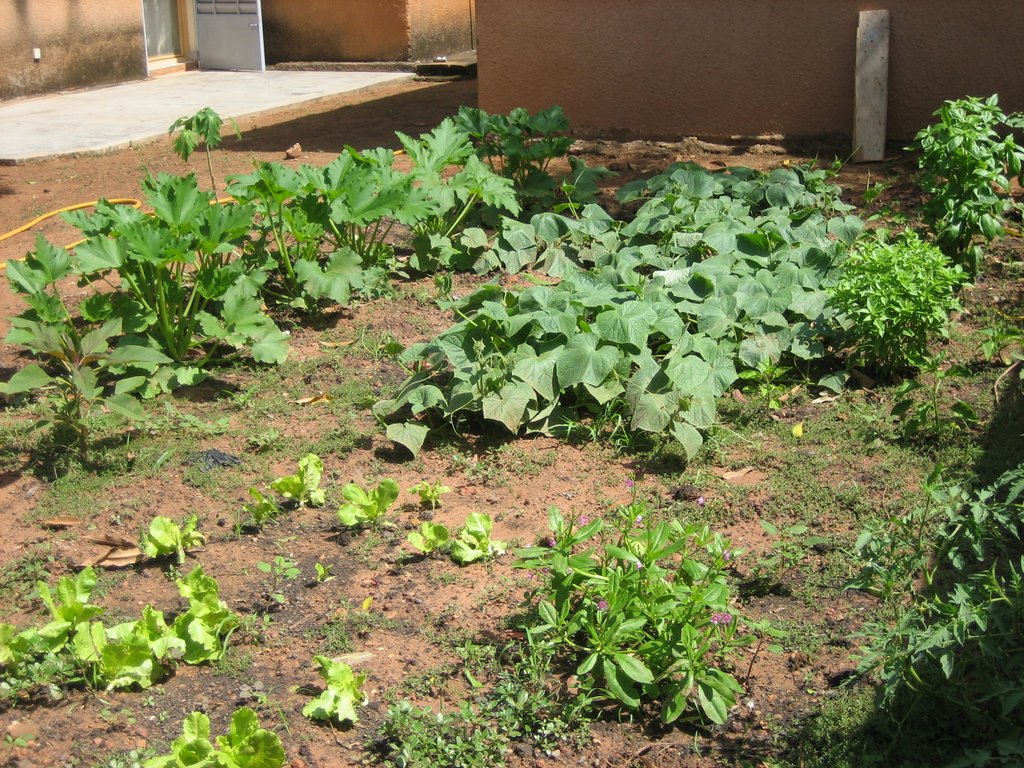
I forgot to add... My garden (after 6 weeks) is coming along nicely – there are lots of baby tomatoes, all still very small & green, and cucumber & zucchini flowers. I’ve been eating basil, spinach, green onions and lettuce too. There are 3 huge and one smaller basil plant, two of which were from seeds; enough for a very large supply of pesto. It will be interesting to see the change after 3 weeks of traveling! I am hoping the veggies hold off until my return. Here is the back garden again (in the photo, the front garden doesn’t look much different although it has filled in quite a bit).
heading out
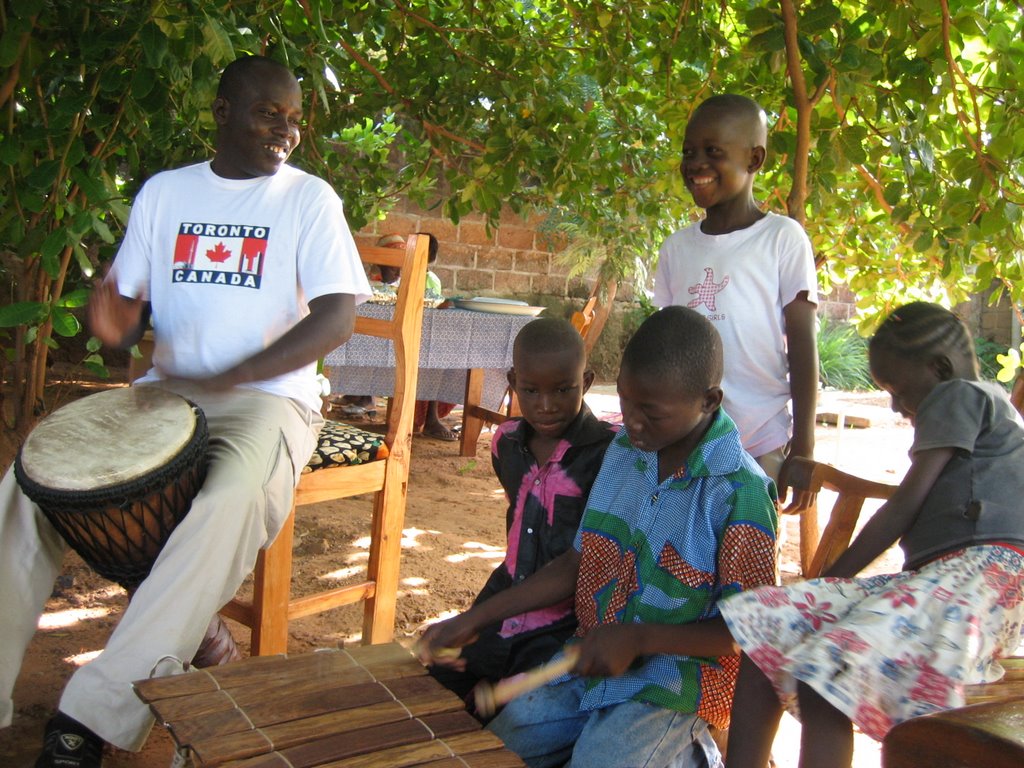
Well, last weekend was the end of Ramadan, the biggest holiday of the year in this primarily Muslim country. I had a mostly quiet weekend, with some fun things thrown in. Good distractions from work, like a concert, a swim at my friends Dana & Allison’s house, and an Eid luncheon, where we ate a lovely meal and had some music – the kids just LOVED the digital camera, and laughed and laughed at their photos. (The musician hasn't been to Toronto - our host of the event brought the t-shirt back from the AIDS Conference in August).
Tuesday we headed to Ouaga where we’ve discovered a few more good places to eat – very exciting! And also had some productive meetings. Tomorrow I head to Dakar, Senegal – which is supposed to be fascinating, but very dangerous – for a couple days, then on to Malawi. In Malawi we will be having the BIPAI Network meeting, and it will be great to hear what the other sites are doing. Hard not to feel frustrated about our slow progress, but we are making progress nonetheless.
Anyhow, have a lovely week.
Laura
Sunday, October 22, 2006
Thoughts on a stressful week
As an ID fellow, we tend to have a lot of time for each patient; we carefully think through each potential diagnosis, how to test for it, the possible treatments. That pace actually suits me quite well; I really like having the time to think carefully through a decision or a patient. I like having as much information as possible. I'm not one for snap decisions...
The style of medicine here is anything but that. Instead, its rushing through the patients, rapid fire. Trying to get through them all before I’m abandoned by nurse and/or intern because I’m taking too long (we round from 8:30 – 12:00; any later and the nurse & intern become mutinous). Struggling with the medical jargon in French, and unable to speak with most of the parents directly. Knowing what the recommendations are, but unable to do them because of “lack of resources” – or lack of will on the part of the hospital. Not knowing the system well enough to get things done. If investigations are done at all – and often the orders are just ignored – they happen the next day.
Some of the kids, so sick when they come in, get better quickly and go home. Actually, that’s most of the kids – its malaria season, so there are at least 10 admissions / night of various forms of severe malaria. Most of them get better quickly with IV quinine. That is so nice to see! But then other kids don’t have malaria… its hard to get other investigations done to sort out what they have. Those kids, I would love to have the time to work through carefully; but there is so little time and so many kids. And sometimes the parents have no money to buy the needed medicines (usually antibiotics).
I know that I will get used to it, and the language get easier, and I will get to know the hospital. Its hard to be patient for those things to happen though! There was nothing else this week besides work, Jula lessons and sleep. No energy for anything else!
However, we did go to a concert at the French Cultural Center Friday night, which was fun – it was really good to get out and do something social.
This weekend is a long weekend here, the end of Ramadan. And then, on Tuesday we head to Ouaga – by plane this time!! Hopefully no misadventures like our last trip. And then on to Dakar for a couple days and Malawi for 2 weeks. We’ll have a long weekend in the middle to do some exploring in Malawi. By the time we come back, my garden will be full of tomatoes, cucumbers, and zucchini as they are all flowering now.
The style of medicine here is anything but that. Instead, its rushing through the patients, rapid fire. Trying to get through them all before I’m abandoned by nurse and/or intern because I’m taking too long (we round from 8:30 – 12:00; any later and the nurse & intern become mutinous). Struggling with the medical jargon in French, and unable to speak with most of the parents directly. Knowing what the recommendations are, but unable to do them because of “lack of resources” – or lack of will on the part of the hospital. Not knowing the system well enough to get things done. If investigations are done at all – and often the orders are just ignored – they happen the next day.
Some of the kids, so sick when they come in, get better quickly and go home. Actually, that’s most of the kids – its malaria season, so there are at least 10 admissions / night of various forms of severe malaria. Most of them get better quickly with IV quinine. That is so nice to see! But then other kids don’t have malaria… its hard to get other investigations done to sort out what they have. Those kids, I would love to have the time to work through carefully; but there is so little time and so many kids. And sometimes the parents have no money to buy the needed medicines (usually antibiotics).
I know that I will get used to it, and the language get easier, and I will get to know the hospital. Its hard to be patient for those things to happen though! There was nothing else this week besides work, Jula lessons and sleep. No energy for anything else!
However, we did go to a concert at the French Cultural Center Friday night, which was fun – it was really good to get out and do something social.
This weekend is a long weekend here, the end of Ramadan. And then, on Tuesday we head to Ouaga – by plane this time!! Hopefully no misadventures like our last trip. And then on to Dakar for a couple days and Malawi for 2 weeks. We’ll have a long weekend in the middle to do some exploring in Malawi. By the time we come back, my garden will be full of tomatoes, cucumbers, and zucchini as they are all flowering now.
Wednesday, October 18, 2006
the Pediatrics Ward
OK, so now I am really working. I'm exhausted, and very stressed. (warning... much jargon ahead... I apologize for the medical entry... )
The peds department is organized into 4 wards - Urgences (emergency / "intensive care"), over 3, under 3 and neonates. The doctor who is supposed to be on Over 3 is on Mat leave - so there is no doctor (that's where we come in). And the intern is sick - though yesterday & the day before I shanghaiied another intern into working with me. Today I was on my own. I have never seen so many patients in one day in my life... and in a foreign language (as it turns out, there are VERY many french medical words that I don't know... words that are part of my every day vocab in English....), and the parents rarely speak French, and the nurse doesn't seem to like being a translator.... I think I saw about 45 inpatients.
It is a frusterating ordeal mostly... hard to get the tests done that I think are absolultely essential ... things like malaria smears, blood counts, etc. So, I'm making decisions based on a partial history, physical exam (but no otoscope) and usually no investigations. Sometimes you prescribe antibiotics and the parents don't buy them - so the kid goes without. Other times, they buy them but for unclear reasons, they aren't administered - or they're administered but not recorded. Sometimes the pharmacy dispenses a different medication than is ordered. It is so exhausting that I have more sympathy for the MDs that never work on changing anything.
Some of the things that I want to do - based on WHO recommendations - are not whats done here, so the nurse doesn't like them. Things like, giving de-worming meds to anemic kids and giving a second drug with the artemesinin compounds. Some recommendations that are proven to improve child survival are not available - like zinc tablets for kids with diarrhea. (And I haven't even seen any kids with severe malnutrition on the over 3 ward, so haven't tackled that yet).
The doctor who works in "Urgences" said to Dana & Suzanne - thank God the kids mostly look after themselves, because we sure can't look after them. Its sadly true. There is such a shortage of personel, tests, drugs, and willingness to get things done. Its really hard.
Anyhow, its sure to get easier with time.
The peds department is organized into 4 wards - Urgences (emergency / "intensive care"), over 3, under 3 and neonates. The doctor who is supposed to be on Over 3 is on Mat leave - so there is no doctor (that's where we come in). And the intern is sick - though yesterday & the day before I shanghaiied another intern into working with me. Today I was on my own. I have never seen so many patients in one day in my life... and in a foreign language (as it turns out, there are VERY many french medical words that I don't know... words that are part of my every day vocab in English....), and the parents rarely speak French, and the nurse doesn't seem to like being a translator.... I think I saw about 45 inpatients.
It is a frusterating ordeal mostly... hard to get the tests done that I think are absolultely essential ... things like malaria smears, blood counts, etc. So, I'm making decisions based on a partial history, physical exam (but no otoscope) and usually no investigations. Sometimes you prescribe antibiotics and the parents don't buy them - so the kid goes without. Other times, they buy them but for unclear reasons, they aren't administered - or they're administered but not recorded. Sometimes the pharmacy dispenses a different medication than is ordered. It is so exhausting that I have more sympathy for the MDs that never work on changing anything.
Some of the things that I want to do - based on WHO recommendations - are not whats done here, so the nurse doesn't like them. Things like, giving de-worming meds to anemic kids and giving a second drug with the artemesinin compounds. Some recommendations that are proven to improve child survival are not available - like zinc tablets for kids with diarrhea. (And I haven't even seen any kids with severe malnutrition on the over 3 ward, so haven't tackled that yet).
The doctor who works in "Urgences" said to Dana & Suzanne - thank God the kids mostly look after themselves, because we sure can't look after them. Its sadly true. There is such a shortage of personel, tests, drugs, and willingness to get things done. Its really hard.
Anyhow, its sure to get easier with time.
Tuesday, October 17, 2006
Week 2 in the periphery
This week was another informative week. I spent the first 3 days at CSPS Farakan, a clinic where women are actually offered prenatal HIV testing – and if they are positive, they are referred into a study that provides free treatment, including all medications necessary, and if wanted, formula to help prevent mother-to-child transmission of HIV. (Its such a good deal that the consent process is almost coercive – no woman could turn down free care for herself & her baby, plus free ARVs, plus maybe free formula!)
Testing of people over the age of 18 months costs 500-1000CFA though it is supposed to be offered free to pregnant women as part of the free prenatal care. PCR testing (the test you do on children under 18 months) costs 10,000CFA – not affordable to anyone here (remember than most people live on less than 500CFA / day). So in effect, they only diagnose HIV in kids over 18 months.

I watched a “sensibilisation” session – the assembled pregnant women sat on a bench and looked at their toes uncomfortably, while the midwife appeared to be haranguing them… it was in Jula, so all I could understand was the word “SIDA” which appeared in almost every sentence. I wondered what she was saying – although no one filled me in.
The moto riding is going pretty well – though still a bit frightening. I rode to work every day this week, a 20-minute drive through parts of town that were new to me. It was neat – although sometimes I was so interested in what was going on around me it was hard to focus on the road.
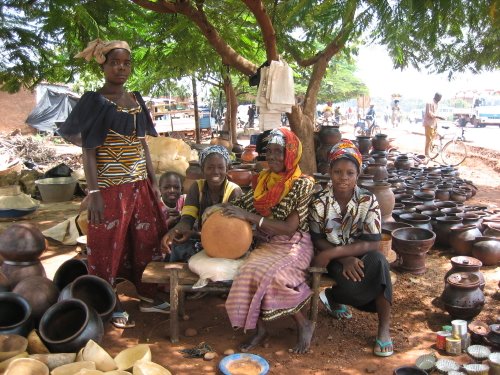
I stopped one afternoon to buy a pottery plant pot. Everyone tells me that people here are reluctant to get their photos taken and so I’ve really taken very few photos. But on a whim, I asked the pot seller if I could take a photo of her - much discussion ensued and the end result was that I could take a photo of her – if I also took a photo of another woman too and then brought back a copy of the photo. Then, there was a long discussion of where I should take these two photos… and then they announced that I should come back another day and take photos of them making the pottery. It was a funny experience. But the photo you see here is pretty typical of the roadside vendors, with the wares on the ground beside the road, and more stalls in the background – most of the shops are of the plywood stall-type.
Have a safe week.
Laura
Testing of people over the age of 18 months costs 500-1000CFA though it is supposed to be offered free to pregnant women as part of the free prenatal care. PCR testing (the test you do on children under 18 months) costs 10,000CFA – not affordable to anyone here (remember than most people live on less than 500CFA / day). So in effect, they only diagnose HIV in kids over 18 months.
I watched a “sensibilisation” session – the assembled pregnant women sat on a bench and looked at their toes uncomfortably, while the midwife appeared to be haranguing them… it was in Jula, so all I could understand was the word “SIDA” which appeared in almost every sentence. I wondered what she was saying – although no one filled me in.
The moto riding is going pretty well – though still a bit frightening. I rode to work every day this week, a 20-minute drive through parts of town that were new to me. It was neat – although sometimes I was so interested in what was going on around me it was hard to focus on the road.
I stopped one afternoon to buy a pottery plant pot. Everyone tells me that people here are reluctant to get their photos taken and so I’ve really taken very few photos.
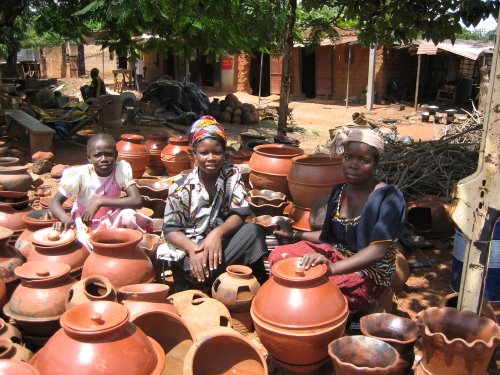 But on a whim, I asked the pot seller if I could take a photo of her - much discussion ensued and the end result was that I could take a photo of her – if I also took a photo of another woman too and then brought back a copy of the photo. Then, there was a long discussion of where I should take these two photos… and then they announced that I should come back another day and take photos of them making the pottery. It was a funny experience. But the photo you see here is pretty typical of the roadside vendors, with the wares on the ground beside the road, and more stalls in the background – most of the shops are of the plywood stall-type.
Have a safe week.
Laura
Monday, October 09, 2006
Thanksgiving.
You may have noticed a gap in entries. In a way its been because I’ve been busy – but also because its been hard to know what to write as well.
Its funny, I have so much training and so many degrees & diplomas now… but even though I can easily talk theoretically about many of these problems that we are seeing – for example, the various causes and contributors to child malnutrition, how it should be managed in theory, etc – I feel somewhat overwhelmed when thinking about what to do practically to help ameliorate this system that often just doesn’t work. Part of why I have so much education is that I always think I don’t know enough to actually start… yet, here we are. So, where do you start? What can you do that is going to have a lasting impact? How do you make changes & suggestions without sounding imperialistic? Where do you find sustainable funds to pay for necessary medicines and treatments? These are the questions I’ve been wrestling with, how to take all this theory I now know so well and transfer it to action.
We are starting with an 8 week orientation of sorts. A series of rotations through the peripheral clinics, the pediatric service and the adult (maternity & internal medicine) services so that we can get a handle on the way the health system functions. Or doesn’t.
I’ve been in the peripheral clinics and Thursday and Friday I spent visiting the CSPS Accart-Ville, where I got to see nutrition interventions – the monthly weighing of well kids (with checks of their vaccine records) and the CREN (Centre de Rehabilitation et Education Nutritionnel) where they provide food supplements and education to mothers of kids who are malnourished. Severely malnourished kids are referred to the main hospital, but mild-moderate ones are treated locally. The kids receive vitamin A on admission to the program, and their mothers come every day and are taught how to make a number of different “bouilles” or gruels, with rice or milk or eggs. The mothers are responsible for cooking the bouille, with supervision of the nurse / nutritionist. In the process, they learn about different public health interventions, like hand washing & hygiene, vaccinations, home management of diarrhea, signs of severe malnutrition and other topics chosen by the mothers. At this CREN, it costs the families 25 CFA / day; nearly everyone can scrape together that much and it would cost more to buy the nutritious food that is provided. The kids are weighed once weekly, and referred to see the nurse if they aren’t gaining weight appropriately.
Friday I did consultations with two of the nurses – there are not enough doctors, so nurses provide the primary care. At first they seemed displeased that I was there, but over the course of the morning they warmed to me, and I did a few teaching things. (Like, recommended that they use Tylenol instead of aspirin for kids who may have viral infections because of the risk of Reye’s syndrome, which they’d never heard of). Most of the kids had fever, and they were all given a diagnosis of malaria and prescribed oral quinine. No smears are done at the CSPS level (or in the hospital for that matter but that’s for another day). It was interesting to see how things work. I asked about their PMTCT (Prevention of Mother to Child Transmission of HIV) program – the person who was trained in that left, so they don’t do it any more. They do recommend HIV testing and if the mothers accept testing, and are positive, they are referred on to a center that can follow them.
This coming week, I’ll be spending time at another CSPS that does lots of maternity and even PMTCT. It will be interesting to learn more about the barriers to care, and the strengths too of the decentralized system.

The other big news was my moto. I’ve been thinking about purchasing it since shortly after arrival and the only reason it took this long was procrastination. Bobo has more motorcycles / mopeds / scooters per capita than any other city I’ve ever seen. Even the hospital parking lot is mostly for motos. There are relatively few cars on the road here (1 car for every 5-10 motos!) and many of the streets are wide although rutted & potholed. However, until a few weeks ago, I had never driven any two wheeled motorized vehicle… so its still a little terrifying. But I have to say that it is SO much nicer to have my own transport and not have to depend on finding a taxi willing to take me to my house. All 4 of us now have motos – Dana bought hers yesterday, the last to go. Sunday, I was able to go visit Dana for a while, a feat nearly impossible without wheels as no taxis go from my house to hers.
Anyhow, I hope everyone at home had a lovely Thanksgiving. (OK, well, all those Canadians for whom it was Thanksgiving this weekend). Its odd to think of you at home, the leaves turning, the weather cold, tucked inside and having turkey feasts… while I am sitting here sweating in a tank top & shorts, and struggling to think of where we’re going to find refeeding formula to give to the malnourished kids in the hospital.
Its funny, I have so much training and so many degrees & diplomas now… but even though I can easily talk theoretically about many of these problems that we are seeing – for example, the various causes and contributors to child malnutrition, how it should be managed in theory, etc – I feel somewhat overwhelmed when thinking about what to do practically to help ameliorate this system that often just doesn’t work. Part of why I have so much education is that I always think I don’t know enough to actually start… yet, here we are. So, where do you start? What can you do that is going to have a lasting impact? How do you make changes & suggestions without sounding imperialistic? Where do you find sustainable funds to pay for necessary medicines and treatments? These are the questions I’ve been wrestling with, how to take all this theory I now know so well and transfer it to action.
We are starting with an 8 week orientation of sorts. A series of rotations through the peripheral clinics, the pediatric service and the adult (maternity & internal medicine) services so that we can get a handle on the way the health system functions. Or doesn’t.
I’ve been in the peripheral clinics and Thursday and Friday I spent visiting the CSPS Accart-Ville, where I got to see nutrition interventions – the monthly weighing of well kids (with checks of their vaccine records) and the CREN (Centre de Rehabilitation et Education Nutritionnel) where they provide food supplements and education to mothers of kids who are malnourished. Severely malnourished kids are referred to the main hospital, but mild-moderate ones are treated locally. The kids receive vitamin A on admission to the program, and their mothers come every day and are taught how to make a number of different “bouilles” or gruels, with rice or milk or eggs. The mothers are responsible for cooking the bouille, with supervision of the nurse / nutritionist. In the process, they learn about different public health interventions, like hand washing & hygiene, vaccinations, home management of diarrhea, signs of severe malnutrition and other topics chosen by the mothers. At this CREN, it costs the families 25 CFA / day; nearly everyone can scrape together that much and it would cost more to buy the nutritious food that is provided. The kids are weighed once weekly, and referred to see the nurse if they aren’t gaining weight appropriately.
Friday I did consultations with two of the nurses – there are not enough doctors, so nurses provide the primary care. At first they seemed displeased that I was there, but over the course of the morning they warmed to me, and I did a few teaching things. (Like, recommended that they use Tylenol instead of aspirin for kids who may have viral infections because of the risk of Reye’s syndrome, which they’d never heard of). Most of the kids had fever, and they were all given a diagnosis of malaria and prescribed oral quinine. No smears are done at the CSPS level (or in the hospital for that matter but that’s for another day). It was interesting to see how things work. I asked about their PMTCT (Prevention of Mother to Child Transmission of HIV) program – the person who was trained in that left, so they don’t do it any more. They do recommend HIV testing and if the mothers accept testing, and are positive, they are referred on to a center that can follow them.
This coming week, I’ll be spending time at another CSPS that does lots of maternity and even PMTCT. It will be interesting to learn more about the barriers to care, and the strengths too of the decentralized system.
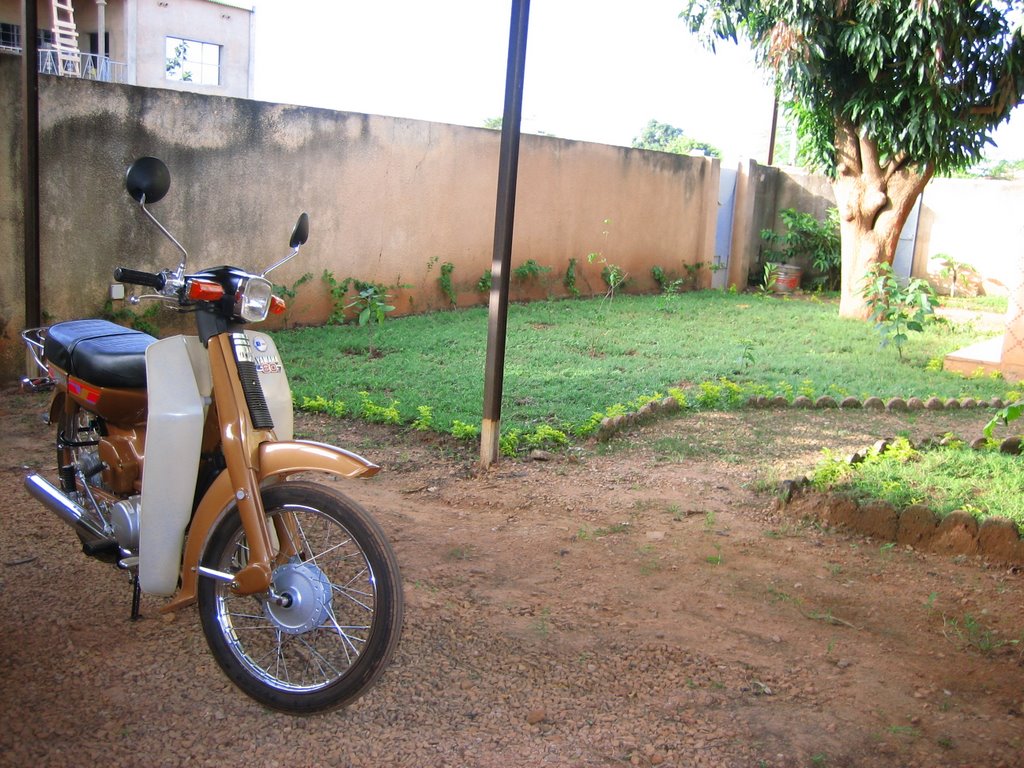
The other big news was my moto. I’ve been thinking about purchasing it since shortly after arrival and the only reason it took this long was procrastination. Bobo has more motorcycles / mopeds / scooters per capita than any other city I’ve ever seen. Even the hospital parking lot is mostly for motos. There are relatively few cars on the road here (1 car for every 5-10 motos!) and many of the streets are wide although rutted & potholed. However, until a few weeks ago, I had never driven any two wheeled motorized vehicle… so its still a little terrifying. But I have to say that it is SO much nicer to have my own transport and not have to depend on finding a taxi willing to take me to my house. All 4 of us now have motos – Dana bought hers yesterday, the last to go. Sunday, I was able to go visit Dana for a while, a feat nearly impossible without wheels as no taxis go from my house to hers.
Anyhow, I hope everyone at home had a lovely Thanksgiving. (OK, well, all those Canadians for whom it was Thanksgiving this weekend). Its odd to think of you at home, the leaves turning, the weather cold, tucked inside and having turkey feasts… while I am sitting here sweating in a tank top & shorts, and struggling to think of where we’re going to find refeeding formula to give to the malnourished kids in the hospital.
Monday, October 02, 2006
What is it like there?
I was thinking about that question as I took a taxi home from our meeting this afternoon. Let me try to describe a typical taxi ride.
At the corner of the market, next to the lady where I often buy my fruit (right now, papayas, grapefruit, avocado, pineapple) I can often find a taxi. The corner has lots of people around, and across the street is a moto parkade – more motos than I’d ever seen in one place, neatly placed one against the next. It costs 50CFA (10 cents) to park your moto in the lots. Also in front of the market is one of very many plastic bucket sellers. I’m not sure why, but many corners have a woman with a large array of brightly coloured plastic buckets, and occasionally other things like jugs, baskets and garbage cans. The taxis are all painted green, and almost all are in dreadful condition… often, you can either open the door from the outside or the inside – but rarely both. And the inside handle is often a twisted piece of wire. The windows are stuck where they are (so if it rains, you get wet). The upholstery has a general red tinge from the dust. The car often sounds and looks as if its on its last legs (they all do). I pile in, with a number of other people and head off. Sometimes, there’s two people in the front bucket seat, and up to 4 in the back. (These are small cars!)
The main roads downtown are paved, but on the edges the pavement breaks. There’s no sidewalks, just red dust. Even downtown the smaller roads are unpaved. As we head for the first rond-point (traffic circle), we pass many men with sticks displaying cell phone recharge cards, 2 or 3 on every block. We may pass the pillow salesman, walking down the road with a stack of 4 pillows on his head, and two hanging from each arm. Or the bag salesmen, with 10 different backpacks or sports bags hanging from them. Or one of the dozens of women with a large tin bowl or platter balanced on her head, containing bananas or papayas or something else. We also will pass the beggars, there’s a family on each of several corners; the kids dressed in fancy dresses (that surely came from the clothing donations that are packaged and sent to Africa in 1-ton cubes) with small plastic bowls and sad eyes. We will also see a number of 10-12 year old boys with boxes balanced on their heads, containing travel-sized packages of Kleenex, or toothbrushes, or some other random thing. We will pass several “telecentres” which are Burkina’s answer to public phones – they’re private businesses that let you make a phone call for a fee. There are always a group of 6 or 7 men hanging around the foosball table that’s on one corner.
Past the rond-point, we’ve now left the “urban” area and get to the “suburbs”. Now we pass more women carrying loads of fruit or wood, or other packages on their head. At least 2/3 of them have a baby strapped to their back, almost always sleeping or quietly looking around (never crying or fussing). We will pass on each corner a woman sitting on a stool in front of a little charcoal burner that has ears of corn being roasted, or sometimes plantains. There is a plethora of plywood stalls, sometimes just a bench with a sunshade, sometimes a small building; they sell fruit or eggs or sometimes drinks.
The taxi turns to the right, off the paved road and into the “quartier populaire,” either Balomakote or Sarfalo – the first time this happened, I just about had a heart attack. Now I know that 80% of the taxi’s I take will swing through one of the neighbourhoods bordering my own. The pavement ends, 5 meters from the main road, and the road becomes a rutted obstacle course, with huge grooves carved by the rainfall, and goats (many goats), and occasionally donkeys, cows and rarely pigs. There are small children everywhere, often wearing a t-shirt & underwear and nothing else. The houses are all made of red mud brick and some look quite tidy but many appear as if they are about to fall down. There are markets out there too, but rather than the stalls of the Grand Marché, there are plywood benches with a roof, each with a scanty pile of tomatoes, or peanuts, or peppers. We pass people collecting water from a communal tap, some with oil drums on wheels (I think those are small businesses that then deliver water to homes & businesses), some by girls and sometimes boys with buckets or large bowls that then get hoisted onto the head and gingerly walked home. On several corners we pass what are effectively garbage dumps, in the middle of the road; there is often someone picking through to find any recyclable, and often an animal or two rooting around in there as well. Sometimes we’ll pass some bigger girls carrying firewood on their heads, and a smaller sibling walks behind with one small thing, learning to balance it on his or her head. The kids stare at me peering out of the taxi and yell “toubabu, toubabu” and I smile & wave and they get a huge kick out of that. Eventually, we drop off the other passengers and continue back on the paved road towards my house.
At my corner, we turn to the left, down a street that almost never sees taxis (people who live on this street own cars, except me!)… despite the fact that its one of the fancier neighbourhoods, the roads are just as rutted but there’s little garbage around. And instead of mud brick houses, the streets are lined with the walls of the homes, each with a metal gate and a driveway for the car. There are trees & shrubs along the sides, and it is green, much greener than the neighborhood we’ve just left. And in comparison, there is hardly anyone about, just a guard sitting board in front of each door, and a couple kids running around. And then, I walk into my house (which is as big as 6 houses in Sarfalo), with the refrigerator running, and turn on my fan and lights, pull out my computer or my books, and look at my garden. My home existence is so very privileged. Even though I have few “toys”, no TV, or stereo, and only a few books, and my house is sparsely furnished, its hot running water, fridge, stove and air conditioners are still unimaginable luxury compared to how the vast majority of Burkinabé live.
At the corner of the market, next to the lady where I often buy my fruit (right now, papayas, grapefruit, avocado, pineapple) I can often find a taxi. The corner has lots of people around, and across the street is a moto parkade – more motos than I’d ever seen in one place, neatly placed one against the next. It costs 50CFA (10 cents) to park your moto in the lots. Also in front of the market is one of very many plastic bucket sellers. I’m not sure why, but many corners have a woman with a large array of brightly coloured plastic buckets, and occasionally other things like jugs, baskets and garbage cans. The taxis are all painted green, and almost all are in dreadful condition… often, you can either open the door from the outside or the inside – but rarely both. And the inside handle is often a twisted piece of wire. The windows are stuck where they are (so if it rains, you get wet). The upholstery has a general red tinge from the dust. The car often sounds and looks as if its on its last legs (they all do). I pile in, with a number of other people and head off. Sometimes, there’s two people in the front bucket seat, and up to 4 in the back. (These are small cars!)
The main roads downtown are paved, but on the edges the pavement breaks. There’s no sidewalks, just red dust. Even downtown the smaller roads are unpaved. As we head for the first rond-point (traffic circle), we pass many men with sticks displaying cell phone recharge cards, 2 or 3 on every block. We may pass the pillow salesman, walking down the road with a stack of 4 pillows on his head, and two hanging from each arm. Or the bag salesmen, with 10 different backpacks or sports bags hanging from them. Or one of the dozens of women with a large tin bowl or platter balanced on her head, containing bananas or papayas or something else. We also will pass the beggars, there’s a family on each of several corners; the kids dressed in fancy dresses (that surely came from the clothing donations that are packaged and sent to Africa in 1-ton cubes) with small plastic bowls and sad eyes. We will also see a number of 10-12 year old boys with boxes balanced on their heads, containing travel-sized packages of Kleenex, or toothbrushes, or some other random thing. We will pass several “telecentres” which are Burkina’s answer to public phones – they’re private businesses that let you make a phone call for a fee. There are always a group of 6 or 7 men hanging around the foosball table that’s on one corner.
Past the rond-point, we’ve now left the “urban” area and get to the “suburbs”. Now we pass more women carrying loads of fruit or wood, or other packages on their head. At least 2/3 of them have a baby strapped to their back, almost always sleeping or quietly looking around (never crying or fussing). We will pass on each corner a woman sitting on a stool in front of a little charcoal burner that has ears of corn being roasted, or sometimes plantains. There is a plethora of plywood stalls, sometimes just a bench with a sunshade, sometimes a small building; they sell fruit or eggs or sometimes drinks.
The taxi turns to the right, off the paved road and into the “quartier populaire,” either Balomakote or Sarfalo – the first time this happened, I just about had a heart attack. Now I know that 80% of the taxi’s I take will swing through one of the neighbourhoods bordering my own. The pavement ends, 5 meters from the main road, and the road becomes a rutted obstacle course, with huge grooves carved by the rainfall, and goats (many goats), and occasionally donkeys, cows and rarely pigs. There are small children everywhere, often wearing a t-shirt & underwear and nothing else. The houses are all made of red mud brick and some look quite tidy but many appear as if they are about to fall down. There are markets out there too, but rather than the stalls of the Grand Marché, there are plywood benches with a roof, each with a scanty pile of tomatoes, or peanuts, or peppers. We pass people collecting water from a communal tap, some with oil drums on wheels (I think those are small businesses that then deliver water to homes & businesses), some by girls and sometimes boys with buckets or large bowls that then get hoisted onto the head and gingerly walked home. On several corners we pass what are effectively garbage dumps, in the middle of the road; there is often someone picking through to find any recyclable, and often an animal or two rooting around in there as well. Sometimes we’ll pass some bigger girls carrying firewood on their heads, and a smaller sibling walks behind with one small thing, learning to balance it on his or her head. The kids stare at me peering out of the taxi and yell “toubabu, toubabu” and I smile & wave and they get a huge kick out of that. Eventually, we drop off the other passengers and continue back on the paved road towards my house.
At my corner, we turn to the left, down a street that almost never sees taxis (people who live on this street own cars, except me!)… despite the fact that its one of the fancier neighbourhoods, the roads are just as rutted but there’s little garbage around. And instead of mud brick houses, the streets are lined with the walls of the homes, each with a metal gate and a driveway for the car. There are trees & shrubs along the sides, and it is green, much greener than the neighborhood we’ve just left. And in comparison, there is hardly anyone about, just a guard sitting board in front of each door, and a couple kids running around. And then, I walk into my house (which is as big as 6 houses in Sarfalo), with the refrigerator running, and turn on my fan and lights, pull out my computer or my books, and look at my garden. My home existence is so very privileged. Even though I have few “toys”, no TV, or stereo, and only a few books, and my house is sparsely furnished, its hot running water, fridge, stove and air conditioners are still unimaginable luxury compared to how the vast majority of Burkinabé live.
Saturday, September 30, 2006
starting in the clinic Monday!
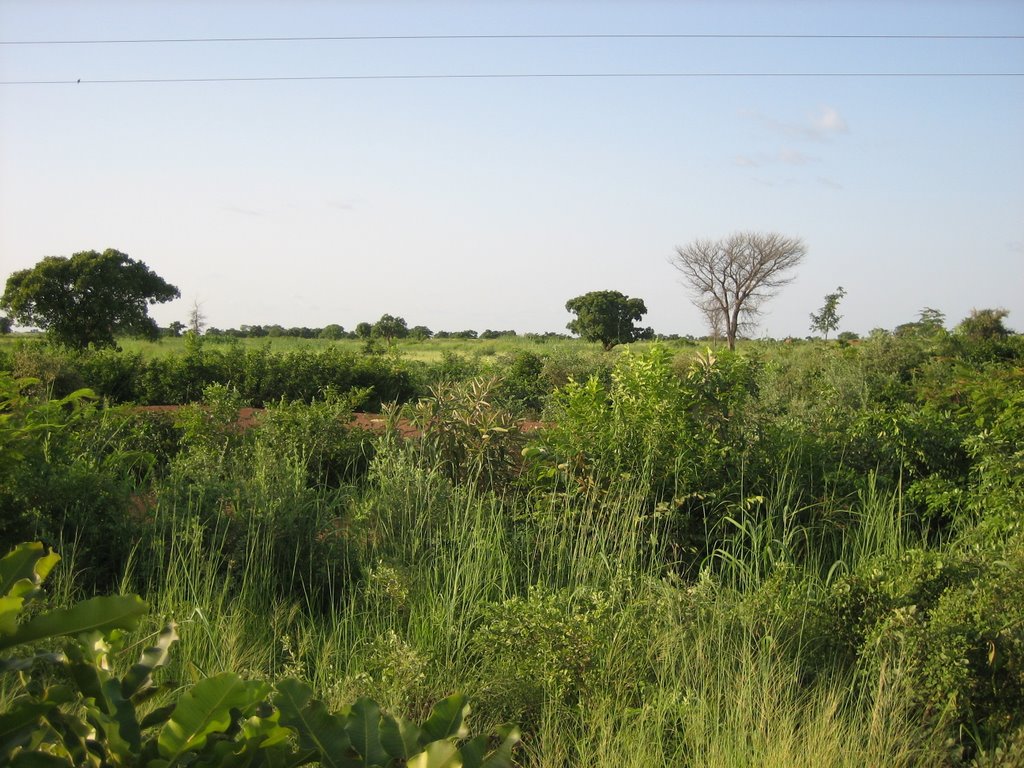
Just a brief entry. We met with Dr. Nacro this morning, and we're all set to start at 7:30 am Monday. We'll begin as observers, but hopefully this will help things progress a bit further. And we will all be happy to start seeing patients. I will be starting in a regional medical center - a CMA, in the northern part of the city. Dana & Leah will start in pediatrics, and Suzanne will start in Maternity. I'm nervous but looking forward to starting the clinical work at long last.
A couple photos here - the first is an example of the scenery here - its about the same, all the way from Bobo to Ouaga - in the wet season, that is.

The second is my nascent vegetable garden - doesn't look like much, but considering this was a patch of red dirt 2 weeks ago, I'm pretty impressed. The tall things along the back are the tomato plants, with lettuce in the foreground and onions off to the right.
Hope you all have a peaceful & restful weekend.
Friday, September 29, 2006
Doni doni kono nita niama
That is Jula for “slowly, slowly, the bird builds its nest”… little by little things come together. Very, very slowly.
On Wednesday we visited the CREN, or outpatient malnutrition ward. This is also where the kids above age 18 months who have HIV come to be checked in and have weight and temperature checked. Its all open air, with a tin roof and is made up of a cooking area, where they make breakfast & lunch for the kids every day over an open fire (with smoke filling the rest of the area), a weight / visit / education area and a paillote or palapa for eating in (funny that I know French & Spanish words but not an English word for that – it’s a conical roof structure, with low walls so its open to the breeze but the roof shape is cooler than a flat roof).
The kids are weighed every Wednesday, and their weights carefully written in their carnet de santé and their CREN chart. They come each morning for their breakfast & lunch, and the parents theoretically find dinner for them somewhere else. They have education sessions once every 2-4 weeks, things like how to prepare nutrition meals with local ingredients, etc. Some of the kids are losing weight even while being followed in the CREN… its not clear if anything different is done for those kids.
It was upsetting to see kids that are losing weight even there; two kids stand out. One had puffiness around his eyes and feet that suggested kwashiorkor; he was listless and a bit fussy. The nutritionist dutifully wrote down the weight, no plan to do anything else. The second was a 2 year old who weighed 4.9kg, and who’s weight has been decreasing steadily for 2 months of weekly weigh-ins in the CREN. When his mom put him on the scale to be weighed, he puckered his face as if to cry, but there was no energy to actually cry. He tried to raise his arm to his mother, but the tiny arm of skin & bones, only made it half way up before he couldn’t raise it any further. His skin hung off him in folds. His mother was cachectic (looked like she was starving herself). The morning brought home to me in a very painful way that we have been here 2 months and are not yet seeing patients… while we could ask about the kids, suggest they be referred, there was nothing we could actually do. When I got home, I cried.
On the optimistic side, we should be starting work in the hospital on Monday, so we will be spending 7-2 every day there, and then in the afternoons work on the meetings and relationship building that we need to do to get to know the players and the system and to integrate our project well. (And if you’re wondering why we’re not being pushier at this time, its because if we did that we could be creating bigger problems and roadblocks for ourselves, so we’re trying to do things the ‘right’ way).
On a totally unrelated, frivolous note…
I got a package from home! What a treat to get some mail. My dad sent me the DVD Capote, and my East Africa handbook. It took only 2 weeks, which was much faster than expected. And it cost 150CFA to liberate it from the post office… I think if it’s a high value package there may be taxes to pay as well, but there wasn’t on this package.
My garden is coming along, the zucchini & cucumber from seeds are coming up, there is are several tomato flowers and a small tomato on one of the plants, and I got some flowering bushes and a frangipani (my favorite flower, native to the Pacific) to put in the front yard yesterday.
It seems that every time I turn around I'm having a plumbing or electrical problem. Monday, blocked sink & 3 running toilets, Tuesday a broken light fixture cover, Wednesday a blown fuse, Thursday the kitchen tap started making bizarre sounds and then this morning after my shower I heard a "drip drip drip" and my hot water tank was leaking... so for the 2nd time this week, I had the plumber here and the hot water tank problem was easily fixed but the strange sounds from the kitchen tap signified a dying kitchen tap and so that I've had to replace for $50. Ugh! Good thing labor is cheap here - the electrician visit for the blown fuse (it’s the kind you need to replace the actual fuse) cost $1.50 for the fuse and $1 for the labor. Not the same as at home!
I hope everyone has a safe & relaxing weekend. Feel free to write comments on the blog!
With love,
Laura
On Wednesday we visited the CREN, or outpatient malnutrition ward. This is also where the kids above age 18 months who have HIV come to be checked in and have weight and temperature checked. Its all open air, with a tin roof and is made up of a cooking area, where they make breakfast & lunch for the kids every day over an open fire (with smoke filling the rest of the area), a weight / visit / education area and a paillote or palapa for eating in (funny that I know French & Spanish words but not an English word for that – it’s a conical roof structure, with low walls so its open to the breeze but the roof shape is cooler than a flat roof).
The kids are weighed every Wednesday, and their weights carefully written in their carnet de santé and their CREN chart. They come each morning for their breakfast & lunch, and the parents theoretically find dinner for them somewhere else. They have education sessions once every 2-4 weeks, things like how to prepare nutrition meals with local ingredients, etc. Some of the kids are losing weight even while being followed in the CREN… its not clear if anything different is done for those kids.
It was upsetting to see kids that are losing weight even there; two kids stand out. One had puffiness around his eyes and feet that suggested kwashiorkor; he was listless and a bit fussy. The nutritionist dutifully wrote down the weight, no plan to do anything else. The second was a 2 year old who weighed 4.9kg, and who’s weight has been decreasing steadily for 2 months of weekly weigh-ins in the CREN. When his mom put him on the scale to be weighed, he puckered his face as if to cry, but there was no energy to actually cry. He tried to raise his arm to his mother, but the tiny arm of skin & bones, only made it half way up before he couldn’t raise it any further. His skin hung off him in folds. His mother was cachectic (looked like she was starving herself). The morning brought home to me in a very painful way that we have been here 2 months and are not yet seeing patients… while we could ask about the kids, suggest they be referred, there was nothing we could actually do. When I got home, I cried.
On the optimistic side, we should be starting work in the hospital on Monday, so we will be spending 7-2 every day there, and then in the afternoons work on the meetings and relationship building that we need to do to get to know the players and the system and to integrate our project well. (And if you’re wondering why we’re not being pushier at this time, its because if we did that we could be creating bigger problems and roadblocks for ourselves, so we’re trying to do things the ‘right’ way).
On a totally unrelated, frivolous note…
I got a package from home! What a treat to get some mail. My dad sent me the DVD Capote, and my East Africa handbook. It took only 2 weeks, which was much faster than expected. And it cost 150CFA to liberate it from the post office… I think if it’s a high value package there may be taxes to pay as well, but there wasn’t on this package.
My garden is coming along, the zucchini & cucumber from seeds are coming up, there is are several tomato flowers and a small tomato on one of the plants, and I got some flowering bushes and a frangipani (my favorite flower, native to the Pacific) to put in the front yard yesterday.
It seems that every time I turn around I'm having a plumbing or electrical problem. Monday, blocked sink & 3 running toilets, Tuesday a broken light fixture cover, Wednesday a blown fuse, Thursday the kitchen tap started making bizarre sounds and then this morning after my shower I heard a "drip drip drip" and my hot water tank was leaking... so for the 2nd time this week, I had the plumber here and the hot water tank problem was easily fixed but the strange sounds from the kitchen tap signified a dying kitchen tap and so that I've had to replace for $50. Ugh! Good thing labor is cheap here - the electrician visit for the blown fuse (it’s the kind you need to replace the actual fuse) cost $1.50 for the fuse and $1 for the labor. Not the same as at home!
I hope everyone has a safe & relaxing weekend. Feel free to write comments on the blog!
With love,
Laura
Tuesday, September 26, 2006
The Burkinabé health care system
Cristina asked in her email about the health care system, and I thought it was a good question, so I’m including my response here.
The health care system is based on a hierarchical, fee-for-service model. The first level of care, present in many villages and communities throughout the country is the “Centre de Santé et Promotion Sanitaire” or “CSPS;” these are health posts or clinics, and have health worker +/- nurse +/- midwife working there. They do IMCI (an algorithm-based strategy for looking after sick kids used by health workers), vaccines, and health teaching, and some supervision of tuberculosis therapy (Directly Observed Therapy, or DOTS). If they can’t handle the problem, the patient is referred to a “CM” or “CMA” (Centre Medical) which is like a small hospital that may have a basic lab, staffed by a physician. They can refer to regional hospitals (which have at least the capability to do blood smears for malaria, sputum smears and a few other labs), and there are 3 reference, “tertiary care” hospitals. In Ouaga, a general hospital and a children’s hospital and here in Bobo a general hospital. The large general hospital has several pediatric subspecialities.
There is little provided for free, although some preventive care and TB care theoretically is. Cost is a huge barrier to seeking care (from what the pediatricians say, and what’s in the literature as well). The pediatricians and GPs at the workshop this weekend were adamant that care of kids & mothers with HIV should be free but the government seems equally adamant that it should not be. Many people have no income; more than half of the people in the country make less than 500CFA (1 USD) per day. An outpatient visit costs 2500CFA. A hospitalization (which includes tests but not medicines) costs at least 2000CFA per day. HIV PCR, a test to diagnose HIV in kids under the age of 18 months, costs 10,000CFA. Almost no parents will pay for that; they can’t afford it, and if there is that much extra money around it rarely goes to that sort of thing. I think that antenatal care, including theoretically available PMTCT (Prevention of Mother to Child Transmission, which includes HIV testing of the mother and single dose nevirapine for mother and baby) is free though we got conflicting info on that. ARVs cost something like 10,000 / month. A normal delivery costs 4500CFA, and a cesarian section 55,000CFA so very few women go to a health care center for their deliveries – they can’t afford it and also, women’s & children’s health isn’t valued all that much. 1000 in 100,000 women here die in childbirth every year, and a woman has a 1 in 12 chance of dying in childbirth in her life… compare that to Canada, where 6 in 100,000 women die in childbirth per year, with a 1 in 8700 lifetime chance of dying in childbirth (its 17 per 100,000 or 1 in 25000 in the US).
While we’re talking about health statistics, did you know that 20% of kids born in Burkina Faso die by the age of 5? (Under 5 mortality rate of 192 per 1000 live births). In Canada its 0.6%, in the US 0.8%. By every measure, Burkina Faso has poor health status.
We got a tour of the Children’s Hospital in Ouagadougou on Friday, which was really interesting. It is new, built in 2002, and has nice wide paths, nice looking buildings and is likely the best equipped hospital in the country. The rooms are mostly 4 beds (exept the expensive private room, for 10,000CFA / day, for which you get a private, air conditioned room). They have a working XRay machine, but their ultrasound machine that has been broken for 2 years. Their hospital equipment maintenance guy died a year ago, and there’s no one to replace him, so all the equipment is slowly disintegrating… and that’s in the well set up children’s hospital! In the ICU they can provide oxygen and more intensive nursing care (frequent vital signs etc). There is one dialysis machine, for acute renal failure.
We’ll be working most of the time in the general peds ward & clinic at the Bobo hospital; I think it will be really challenging. Just to give you an idea of what’s available here … there is an x-ray machine; but it broke, some months ago. No one knows when it will be fixed. We haven’t had an official tour of the hospital here yet, but saw bits of the general peds ward when we were there for some meetings. Its got that African hospital smell (I don’t know what the smell is, but the Children’s ward in Mbarara, Uganda smelled the same). The rooms have 4 beds each, and the day we were there, there was less than 1 kid per bed. I didn’t see any sinks for handwashing anywhere. We will be spending some time visiting the CSPS, CMA and CHRs to get a better sense of how everything works in real life.
The health care system is based on a hierarchical, fee-for-service model. The first level of care, present in many villages and communities throughout the country is the “Centre de Santé et Promotion Sanitaire” or “CSPS;” these are health posts or clinics, and have health worker +/- nurse +/- midwife working there. They do IMCI (an algorithm-based strategy for looking after sick kids used by health workers), vaccines, and health teaching, and some supervision of tuberculosis therapy (Directly Observed Therapy, or DOTS). If they can’t handle the problem, the patient is referred to a “CM” or “CMA” (Centre Medical) which is like a small hospital that may have a basic lab, staffed by a physician. They can refer to regional hospitals (which have at least the capability to do blood smears for malaria, sputum smears and a few other labs), and there are 3 reference, “tertiary care” hospitals. In Ouaga, a general hospital and a children’s hospital and here in Bobo a general hospital. The large general hospital has several pediatric subspecialities.
There is little provided for free, although some preventive care and TB care theoretically is. Cost is a huge barrier to seeking care (from what the pediatricians say, and what’s in the literature as well). The pediatricians and GPs at the workshop this weekend were adamant that care of kids & mothers with HIV should be free but the government seems equally adamant that it should not be. Many people have no income; more than half of the people in the country make less than 500CFA (1 USD) per day. An outpatient visit costs 2500CFA. A hospitalization (which includes tests but not medicines) costs at least 2000CFA per day. HIV PCR, a test to diagnose HIV in kids under the age of 18 months, costs 10,000CFA. Almost no parents will pay for that; they can’t afford it, and if there is that much extra money around it rarely goes to that sort of thing. I think that antenatal care, including theoretically available PMTCT (Prevention of Mother to Child Transmission, which includes HIV testing of the mother and single dose nevirapine for mother and baby) is free though we got conflicting info on that. ARVs cost something like 10,000 / month. A normal delivery costs 4500CFA, and a cesarian section 55,000CFA so very few women go to a health care center for their deliveries – they can’t afford it and also, women’s & children’s health isn’t valued all that much. 1000 in 100,000 women here die in childbirth every year, and a woman has a 1 in 12 chance of dying in childbirth in her life… compare that to Canada, where 6 in 100,000 women die in childbirth per year, with a 1 in 8700 lifetime chance of dying in childbirth (its 17 per 100,000 or 1 in 25000 in the US).
While we’re talking about health statistics, did you know that 20% of kids born in Burkina Faso die by the age of 5? (Under 5 mortality rate of 192 per 1000 live births). In Canada its 0.6%, in the US 0.8%. By every measure, Burkina Faso has poor health status.
We got a tour of the Children’s Hospital in Ouagadougou on Friday, which was really interesting. It is new, built in 2002, and has nice wide paths, nice looking buildings and is likely the best equipped hospital in the country. The rooms are mostly 4 beds (exept the expensive private room, for 10,000CFA / day, for which you get a private, air conditioned room). They have a working XRay machine, but their ultrasound machine that has been broken for 2 years. Their hospital equipment maintenance guy died a year ago, and there’s no one to replace him, so all the equipment is slowly disintegrating… and that’s in the well set up children’s hospital! In the ICU they can provide oxygen and more intensive nursing care (frequent vital signs etc). There is one dialysis machine, for acute renal failure.
We’ll be working most of the time in the general peds ward & clinic at the Bobo hospital; I think it will be really challenging. Just to give you an idea of what’s available here … there is an x-ray machine; but it broke, some months ago. No one knows when it will be fixed. We haven’t had an official tour of the hospital here yet, but saw bits of the general peds ward when we were there for some meetings. Its got that African hospital smell (I don’t know what the smell is, but the Children’s ward in Mbarara, Uganda smelled the same). The rooms have 4 beds each, and the day we were there, there was less than 1 kid per bed. I didn’t see any sinks for handwashing anywhere. We will be spending some time visiting the CSPS, CMA and CHRs to get a better sense of how everything works in real life.
bureacracy & poverty

Sometimes I can forget that I’m living in the 3rd poorest country in the world; my house is quite nice (this is the living room & dining room) and some things things start to seem so normal, like the rutted dirt roads, the mud brick houses in the “district populaire”, the chaos of the market.
And other times its unavoidable; the skinny, stunted kids with clothes that are disintegrating on their backs, the beggars, the desperate merchants.
We had to fire our driver yesterday (the one who went with us to Ouaga), and he was so sad, and so disappointed. And I know he really needed the work. So, it was really hard on me to say, I’m sorry but we gave you many, many chances – but he wasn’t honest towards us; he lied about the condition of the car on Saturday (it had broken down again), and then failed to either pick us up or call us and let us know.
I’m one step closer to having a land line – I actually have a phone number though it won’t be installed until later this week. In theory. So, if anyone has an urge to call me here in Burkina Faso, my land line number will be +226-20-98-52-83 (226 is the country code). (And for those who’ve forgotten – my snail mail address is 01 BP 1243, Bobo Dioulasso, Burkina Faso). Internet at home will hopefully be in the next 2-3 weeks (so then I can make / receive calls on Skype)... however, despite people telling us it is easy, our chart has to be transferred from one department to another, then we have to pay a deposit, then they will do the next step, whatever that is. In the meantime, there are not enough "cartes" (some crucial piece of equipment for us to get DSL at home) in the country, they are sitting in Customs in Ouaga. They should be arriving next week. Inshallah.
Sunday, September 24, 2006
If its not a good time, it’s a good story…
Our trip to Ouaga was very successful (although the transportation was a disaster). We met with a bunch of different departments of the Ministry of Health to discuss our project, and learn about how the Burkinabé health care system works. We also took part in a workshop that looked at the organization of the scale up of management of pediatric HIV in Burkina Faso; that was useful because of the presentations on the first day, and the chance to make lots of good contacts. We also got to tour the children’s hospital and talk with the physician who looks after the HIV patients in Ouaga who is really dynamic and knowledgeable.
We sampled a few of the restaurants of Ouaga, which offer considerably more variety than Bobo… Chinese food, amazing lasagna (would you believe I had the same thing for 2 dinners & a lunch), great pizza, all within walking distance of our new hotel. And there’s a home décor store with stuff that “appeals to western tastes” as the guidebook puts it (Dana & I were like kids in a candy shop).
From the get go, our rental car was a disaster; I already described the trip to Ouaga. Monday, Soliman drove us to our meeting, then failed to show up at the end of the day. Tuesday & Wednesday he spent the day getting the car fixed, so wasn’t available to us. We debated firing them, but I argued with the group that it wasn’t his fault that his car broke down, and that he was trying hard, (and his stereo was stolen) so we should give him the benefit of the doubt. Thursday & Friday he was able to drive us around again, although he failed to show up to pick Dustin up from the airport on Friday afternoon. (He came an hour late, saying he was getting more repairs done and it took longer than he thought). He was to pick us up for the trip home at 8am the next morning.
Soliman came at 7:20 with a story about his papers being taken by the police and he had to retrieve them, but he would pick us up at 10am. At 10:45, he phoned and said that he hadn't got them yet, but would have them for sure by 2pm. We threatened to take the bus but he said no, no, no, he would be there. For sure. So we agreed that if he didn't turn up at 2pm, we would find our own way home, and not pay him for the last 3 days. Leah & Dustin took the bus, but Dana & I agreed to give him one more chance. At 1:45 he called and said he was on his way. At 3pm, no sign of Soliman. We decided to stay in a hotel, and take the 7am bus on Sunday... but we foolishly let the guard convince us that his buddy could drive us, and the price was only slightly higher than what we would have paid our driver. So off we headed... 2 hours into the drive, we hit a traffic jam as they retrieved an overturned, squashed bus out of the ditch (the actual accident had been 2 days before), and watched while they righted it, and a group of 15 men started pushing it down the highway; the wheels still turned just fine, even if the top of the bus was squashed. It got dark. We weren't making very good time. And then, about 80km from Bobo (it’s a 400km trip), on a dirt road detour, the lights faded, dimmed, and the car stopped. So, there we were, broken down car, at night, in a tiny village, 80km from home. Long story short, a kind passer by tried to tow us, but the rope kept breaking and eventually we left the car & driver in the village, and the stranger drove us home. We got home at midnight. While we were on the road, Soliman called Suzanne (who'd returned home the previous day) and said that he was ashamed to call me, since his car had broken down again. She got the update from me, and he later called her back and was surprised and dismayed to hear that we'd left without him, as if we hadn't already given him the benefit of the doubt, only to have him not come through, at least 4 times in the previous days. What did he expect!!!
Transport back and forth to Ouaga is a huge problem. The bus is cheap, but very uncomfortable… and we would be the only NGO other than Peace Corps to be using the bus as our method of transport. Flights are available only 3 days / week and of course are really expensive. And our attempt at a rental car was a huge disaster. I was the one who found the contact, so I feel somewhat responsible for that. There are rental agencies that will rent a 4x4 & driver for >$150 / day plus gas but that is too exhorbitant. But we don’t have the contacts here to get something reasonably priced and reliable.
We sampled a few of the restaurants of Ouaga, which offer considerably more variety than Bobo… Chinese food, amazing lasagna (would you believe I had the same thing for 2 dinners & a lunch), great pizza, all within walking distance of our new hotel. And there’s a home décor store with stuff that “appeals to western tastes” as the guidebook puts it (Dana & I were like kids in a candy shop).
From the get go, our rental car was a disaster; I already described the trip to Ouaga. Monday, Soliman drove us to our meeting, then failed to show up at the end of the day. Tuesday & Wednesday he spent the day getting the car fixed, so wasn’t available to us. We debated firing them, but I argued with the group that it wasn’t his fault that his car broke down, and that he was trying hard, (and his stereo was stolen) so we should give him the benefit of the doubt. Thursday & Friday he was able to drive us around again, although he failed to show up to pick Dustin up from the airport on Friday afternoon. (He came an hour late, saying he was getting more repairs done and it took longer than he thought). He was to pick us up for the trip home at 8am the next morning.
Soliman came at 7:20 with a story about his papers being taken by the police and he had to retrieve them, but he would pick us up at 10am. At 10:45, he phoned and said that he hadn't got them yet, but would have them for sure by 2pm. We threatened to take the bus but he said no, no, no, he would be there. For sure. So we agreed that if he didn't turn up at 2pm, we would find our own way home, and not pay him for the last 3 days. Leah & Dustin took the bus, but Dana & I agreed to give him one more chance. At 1:45 he called and said he was on his way. At 3pm, no sign of Soliman. We decided to stay in a hotel, and take the 7am bus on Sunday... but we foolishly let the guard convince us that his buddy could drive us, and the price was only slightly higher than what we would have paid our driver. So off we headed... 2 hours into the drive, we hit a traffic jam as they retrieved an overturned, squashed bus out of the ditch (the actual accident had been 2 days before), and watched while they righted it, and a group of 15 men started pushing it down the highway; the wheels still turned just fine, even if the top of the bus was squashed. It got dark. We weren't making very good time. And then, about 80km from Bobo (it’s a 400km trip), on a dirt road detour, the lights faded, dimmed, and the car stopped. So, there we were, broken down car, at night, in a tiny village, 80km from home. Long story short, a kind passer by tried to tow us, but the rope kept breaking and eventually we left the car & driver in the village, and the stranger drove us home. We got home at midnight. While we were on the road, Soliman called Suzanne (who'd returned home the previous day) and said that he was ashamed to call me, since his car had broken down again. She got the update from me, and he later called her back and was surprised and dismayed to hear that we'd left without him, as if we hadn't already given him the benefit of the doubt, only to have him not come through, at least 4 times in the previous days. What did he expect!!!
Transport back and forth to Ouaga is a huge problem. The bus is cheap, but very uncomfortable… and we would be the only NGO other than Peace Corps to be using the bus as our method of transport. Flights are available only 3 days / week and of course are really expensive. And our attempt at a rental car was a huge disaster. I was the one who found the contact, so I feel somewhat responsible for that. There are rental agencies that will rent a 4x4 & driver for >$150 / day plus gas but that is too exhorbitant. But we don’t have the contacts here to get something reasonably priced and reliable.
Tuesday, September 19, 2006
back to Ouagadougou - again.
It’s been an eventful few days. The totally frivolous, eventful thing was that my garden is a ll done; well, everything is planted. From pile of mud (first photo) to a donkey cart with topsoil (second photo) to yard filled with baby plants in 3 days (third photo). The gardener comes 1-2 times a day to check on everything because it’s so new. By the time we arrive back from Ouaga, the sparse ground cover should start filling in a bit. I may need to get another few bushes for the front yard though – it doesn’t look as filled in as I was thinking it would. I have 4 papaya trees, 2 banana plants and a plantain, a cherimoya, a pomegranate and 3 pre-existing mango trees. And a large vegetable garden – too large for a single person. I suspect I will be feeding Maimone’s family with all that!

We had another meeting with the Director of Pediatrics, Dr. Nacro on Saturday; he seems like he is very passionate about working for the kids of Bobo Dioulasso – and passionate about his frustrations about some of the problems in the system here. In fact, much of what we talked about was that; we hardly had a word in edgewise to present our ideas about our work. He made a comment that I think will make him good to work with from a North American’s point of view – basically, he said “People say I’m impossible to work with, but I tell it like it is – even though that’s not what’s done here in Burkina” – but I’m glad to have a colleague in a key area that will openly communicate with us. Often what happens if you annoy people is that they won’t tell you that you’ve done something wrong; but you just find that it gets harder and harder to do anything. Dr. Nacro wants to keep that from happening to us, which is nice.
I stopped at the internet quickly just before heading home and discovered an email from Dr. Sanou, the Director of Hospital Services, who is turning out to be another of our key contacts and allies. She was going to organize some meetings in Ouaga for us, but we hadn’t heard when yet. We discovered Saturday afternoon that they’ve been organized for this coming week!! So we had a bit of a scramble to arrange transport (we’re trying a private car / driver hire this time), accommodation and things like canceling Dioula class and finding someone to feed Leah’s cat. But despite the last minute scramble, we’re glad we’re heading back there this week – the sooner we have those meetings, the sooner we’ll be doing clinical work.
So, at 7am Monday morning, our driver, Soliman, picked us up, and we ran errands and by 9:30 were on the road, in plenty of time for our 3:30pm meeting (after all, it’s a 4 hour drive in a private car). Or so we thought. The first sign of difficulties was at Boromo, about half way to Ouaga… we pulled off to a gas station, and Soliman did something under the hood, and within 5 minutes, we were off… stopped again at a toll booth just outside Boromo, and it was clear that the car was overheating. We stood in the shade and made small talk with the toll booth guys (one of whom is a huge Fifty Cent & Tupac fan), and 20 minutes later got on the road again… 20 minutes after that were pulled over to the side of the road overheated. So, back to Boromo where they fixed the fan but were unable to fix something else… so for the next 4 hours, we drove about 45 minutes at a time, no faster than 50km/h, with frequent overheating stops. At one stop, some village boys brought us water for the radiator… they didn’t speak Jula or any French, really. One little boy (about 6yrs) was attired in a pair of shorts, so worn that there was literally no bum in them… he always stayed so he was facing us, not wanting us to see the gaping hole in the read. It was a relief to finally get to Ouaga and get to our hotel rooms. Somehow, though, the hotel rooms at our new hotel are not all equal – I have a deluxe room complete with bathtub… Dana’s room the hot water didn’t work and is half the size, Suzanne had to change rooms because her cold water didn’t work, and Leah’s air conditioner was marginal… I feel a little guilty about that! But last night we had one of the best meals since arriving in Burkina Faso. I had lasagna that was truly wonderful, in a lovely courtyard setting.
Today’s meetings were really interesting. It was day 1 of a 3 day workshop on the development of a plan of pediatric HIV treatment for Burkina Faso; until now, kids have largely been ignored from the HIV planning. So we are really excited to be part of this forum even though we are totally new here. There are no other NGOs present at the meeting, even though there are several providing HIV care in Burkina. Today was a series of presentations on the status of pediatric HIV treatment here. In fact, they have a clinic in Ouaga that follows a very similar model to the COE clinics, which is interesting. We are going to try to spend more time with them to see what they are doing.
Anyhow, I have work to do yet, so I’ll sign off here.
More later!
Laura
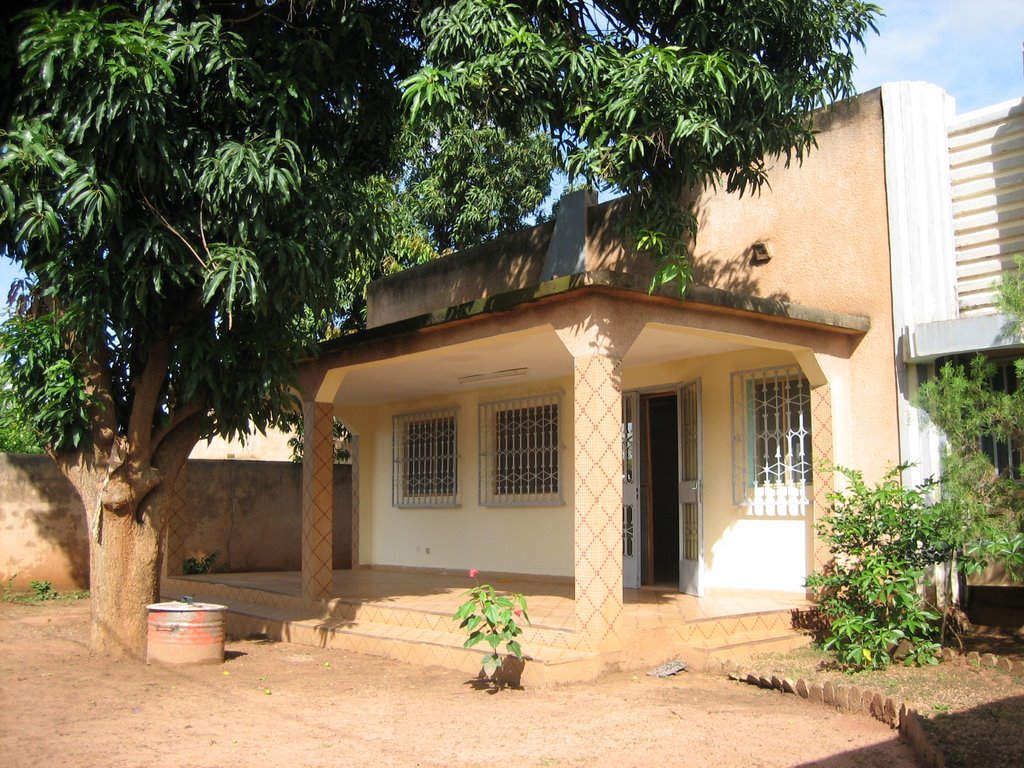 ll done; well, everything is planted. From pile of mud (first photo) to a donkey cart with topsoil (second photo) to yard filled with baby plants in 3 days (third photo). The gardener comes 1-2 times a day to check on everything because it’s so new. By the time we arrive back from Ouaga, the sparse ground cover should start filling in a bit. I may need to get another few bushes for the front yard though – it doesn’t look as filled in as I was thinking it would. I have 4 papaya trees, 2 banana plants and a plantain, a cherimoya, a pomegranate and 3 pre-existing mango trees. And a large vegetable garden – too large for a single person. I suspect I will be feeding Maimone’s family with all that!
We had another meeting with the Director of Pediatrics, Dr. Nacro on Saturday; he seems like he is very passionate about working for the kids of Bobo Dioulasso – and passionate about his frustrations about some of the problems in the system here. In fact, much of what we talked about was that; we hardly had a word in edgewise to present our ideas about our work. He made a comment that I think will make him good to work with from a North American’s point of view – basically, he said “People say I’m impossible to work with, but I tell it like it is – even though that’s not what’s done here in Burkina” – but I’m glad to have a colleague in a key area that will openly communicate with us. Often what happens if you annoy people is that they won’t tell you that you’ve done something wrong; but you just find that it gets harder and harder to do anything. Dr. Nacro wants to keep that from happening to us, which is nice.
I stopped at the internet quickly just before heading home and discovered an email from Dr. Sanou, the Director of Hospital Services, who is turning out to be another of our key contacts and allies. She was going to organize some meetings in Ouaga for us, but we hadn’t heard when yet. We discovered Saturday afternoon that they’ve been organized for this coming week!! So we had a bit of a scramble to arrange transport (we’re trying a private car / driver hire this time), accommodation and things like canceling Dioula class and finding someone to feed Leah’s cat. But despite the last minute scramble, we’re glad we’re heading back there this week – the sooner we have those meetings, the sooner we’ll be doing clinical work.
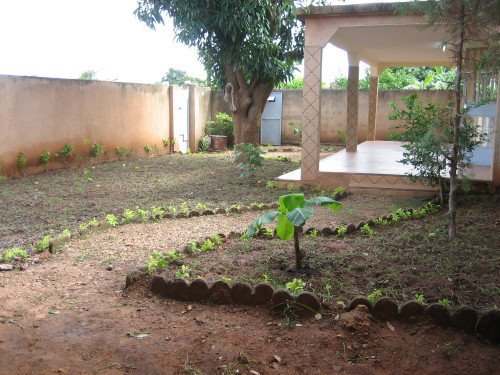
So, at 7am Monday morning, our driver, Soliman, picked us up, and we ran errands and by 9:30 were on the road, in plenty of time for our 3:30pm meeting (after all, it’s a 4 hour drive in a private car). Or so we thought. The first sign of difficulties was at Boromo, about half way to Ouaga… we pulled off to a gas station, and Soliman did something under the hood, and within 5 minutes, we were off… stopped again at a toll booth just outside Boromo, and it was clear that the car was overheating. We stood in the shade and made small talk with the toll booth guys (one of whom is a huge Fifty Cent & Tupac fan), and 20 minutes later got on the road again… 20 minutes after that were pulled over to the side of the road overheated. So, back to Boromo where they fixed the fan but were unable to fix something else… so for the next 4 hours, we drove about 45 minutes at a time, no faster than 50km/h, with frequent overheating stops. At one stop, some village boys brought us water for the radiator… they didn’t speak Jula or any French, really. One little boy (about 6yrs) was attired in a pair of shorts, so worn that there was literally no bum in them… he always stayed so he was facing us, not wanting us to see the gaping hole in the read. It was a relief to finally get to Ouaga and get to our hotel rooms. Somehow, though, the hotel rooms at our new hotel are not all equal – I have a deluxe room complete with bathtub… Dana’s room the hot water didn’t work and is half the size, Suzanne had to change rooms because her cold water didn’t work, and Leah’s air conditioner was marginal… I feel a little guilty about that! But last night we had one of the best meals since arriving in Burkina Faso. I had lasagna that was truly wonderful, in a lovely courtyard setting.
Today’s meetings were really interesting. It was day 1 of a 3 day workshop on the development of a plan of pediatric HIV treatment for Burkina Faso; until now, kids have largely been ignored from the HIV planning. So we are really excited to be part of this forum even though we are totally new here. There are no other NGOs present at the meeting, even though there are several providing HIV care in Burkina. Today was a series of presentations on the status of pediatric HIV treatment here. In fact, they have a clinic in Ouaga that follows a very similar model to the COE clinics, which is interesting. We are going to try to spend more time with them to see what they are doing.
Anyhow, I have work to do yet, so I’ll sign off here.
More later!
Laura
Subscribe to:
Posts (Atom)